
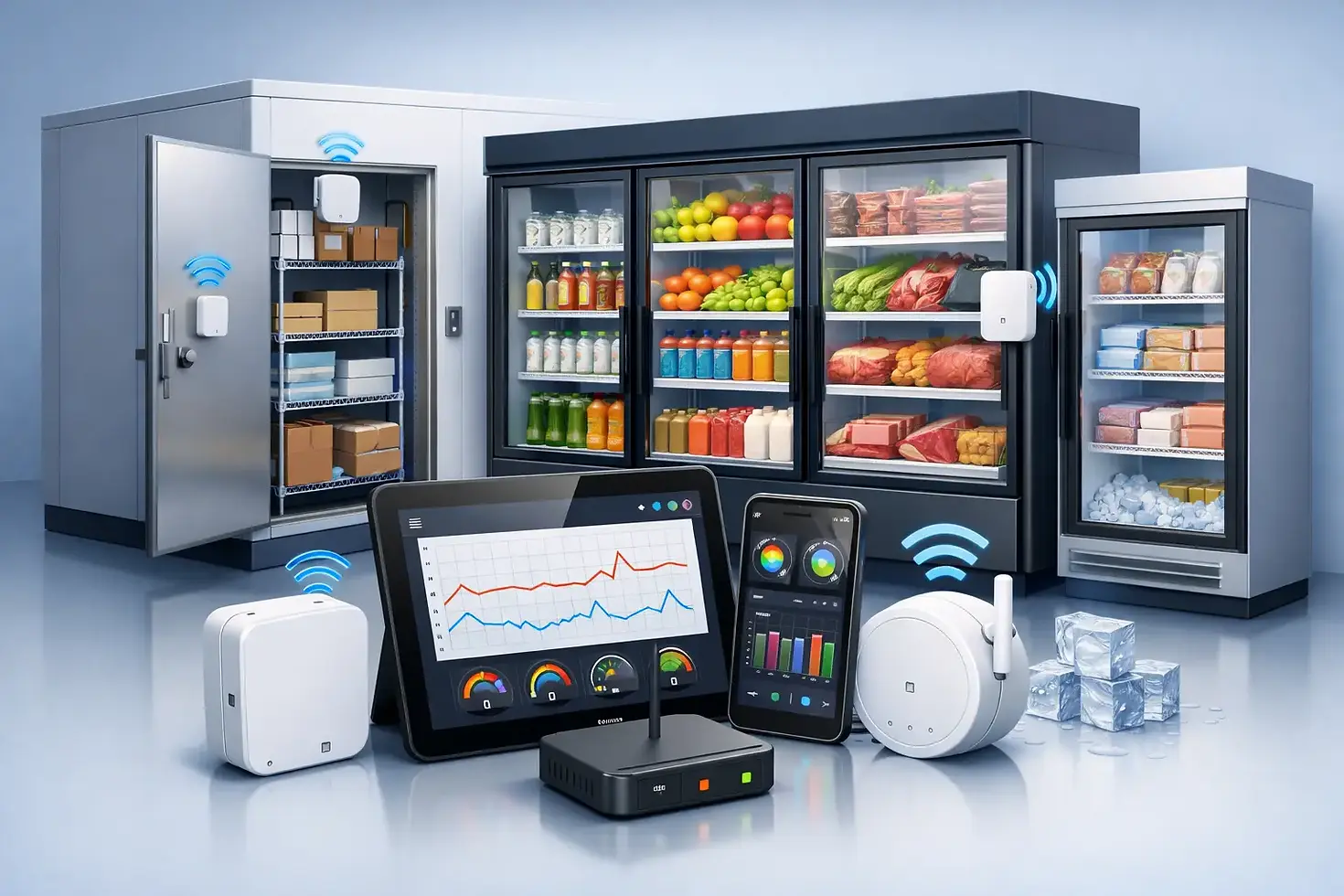
Best Remote Temperature Monitors That Protect Stock
A walk-in freezer does not wait for opening time to fail. A compressor can trip at 2:00 a.m., a door can be left ajar after a delivery, or a power issue can send product temperatures climbing while the building is empty. The best remote temperature monitors are built for that moment: they detect the problem early, prove what happened, and reach the people who can act before inventory becomes a loss.
For a business protecting frozen food, refrigerated inventory, laboratory samples, or temperature-sensitive materials, remote monitoring is not a convenience feature. It is part of loss prevention. The right system protects revenue, supports accountability, and removes the dangerous assumption that someone will notice a problem in time.
What Makes a Remote Temperature Monitor Worth Trusting?
A monitor is only as valuable as its ability to communicate when conditions are bad. A basic device that displays temperature on a wall may be useful for a manual check, but it does nothing when nobody is standing in front of it. A serious remote system continuously measures conditions, compares readings against defined limits, records data, and sends alerts through more than one channel.
That distinction matters because refrigeration failures rarely arrive with a convenient warning. A gradual temperature rise can go unnoticed for hours. A sudden failure may leave an operator with only minutes to respond. The monitor must be dependable during normal operation and equally dependable when the facility is experiencing the very problem it was installed to catch.
The strongest systems combine accurate sensors with a dedicated gateway, supervised communication, secure cloud data storage, and automatic alert workflows. This approach gives operators more than a temperature reading. It provides an active protection system that can show whether sensors are reporting, document temperature history, and notify the right people when a threshold is breached.
Why Cheap Consumer Sensors Are Not Commercial Protection
Low-cost Wi-Fi and Bluetooth temperature sensors are easy to find on Amazon. They may be appropriate for checking a bedroom, a wine cooler, or a hobby project. They are not in the same league as professional monitoring equipment used to protect commercial freezers, inventory, or regulated environments.
The problem is not simply sensor price. Consumer devices often rely on a home-grade Wi-Fi connection, limited wireless range, a single phone app, and notifications that can be missed, muted, delayed, or never sent when connectivity fails. They may offer little visibility into whether the device is still checking in. If a battery dies, the Wi-Fi drops, or a router is unplugged, the business may not know its protection disappeared until after the loss.
Commercial sites need more strength and more layers of protection. They need long-range wireless performance that works across difficult building layouts, supervised architecture that identifies communication failures, secure transmission, historical reporting, and alerts sent by phone call, text, and email to multiple contacts. A notification sent to one person is not a response plan. A notification sequence that escalates until someone takes action is.
A cheap monitor can tell you a freezer is warm. A professional system is designed to make sure you find out before the freezer destroys your stock.
The Features That Separate the Best Remote Temperature Monitors
When comparing systems, focus on the conditions that cause losses in real facilities, not just a product page temperature range. A monitor should be selected based on the asset, the building, the communications environment, and the cost of being wrong.
Supervised sensors and communication
A temperature alert is meaningless if the sensor has gone offline. Supervised monitoring checks that sensors and gateways are communicating as expected. If a device stops reporting because of a battery issue, interference, or a damaged unit, the system can flag that failure before it becomes a blind spot.
This is a major difference between professional monitoring and a basic connected thermometer. You should not have to discover that your protection system failed at the same time you discover that the freezer failed.
Multiple alert paths and unlimited contacts
A text message alone is not enough for critical inventory. People sleep, work in noisy areas, lose signal, or overlook a notification among dozens of others. Strong remote monitoring systems support phone, text, and email notifications so emergency contacts can be reached in the way most likely to prompt action.
Unlimited contacts are especially important for businesses with multiple shifts, managers, owners, maintenance vendors, or franchise oversight. The alert should reach the person who can respond, not stop with the first person who happens to be unavailable.
Long-range wireless performance
Facilities are difficult radio environments. Concrete walls, steel doors, insulated walk-ins, refrigeration equipment, storage racks, and distance can weaken ordinary wireless signals. A system designed for long-range monitoring reduces the need to place a Wi-Fi access point next to every protected asset or depend on a Bluetooth connection that only works nearby.
Before installation, consider sensor placement carefully. Air temperature, product temperature, door status, and equipment power can each tell a different part of the story. A walk-in freezer with a door sensor and a temperature sensor provides far better diagnostic value than a temperature reading alone.
Secure records and reporting
A remote monitor should create a defensible record, not just an alert. Temperature history helps operators investigate a complaint, identify recurring equipment issues, verify corrective action, and provide documentation for internal review or inspection needs.
Security also matters. Monitoring data and system controls should not be left exposed through weak consumer-grade connections. Professional systems use secure communications and controlled access because a facility protection system should not create another operational vulnerability.
Match the Monitoring System to the Risk
The best choice depends on what a temperature excursion would cost. A homeowner protecting a basement freezer, vacation property, or sensitive storage area may need a dependable system that also watches for water leaks and humidity changes. Home-Sentry® is built for that kind of residential protection, giving homeowners early warning before an overlooked issue becomes damaged property or spoiled food.
Commercial environments demand more. Restaurants, grocery operations, warehouses, laboratories, retail stores, and foodservice operators need monitoring that can cover multiple assets and grow with the site. They may also need to track power, water leaks, humidity, motion, pressure, voltage, or equipment status alongside temperature.
Shop-Sentry® from ABW Innovations is designed for this broader operational risk. Its wireless monitoring platform supports a catalog of more than 80 sensor options, allowing businesses to protect refrigeration equipment and the conditions around it rather than relying on a single temperature number. The system combines sensors, gateways, hosted data, alerts, reporting, and control capabilities into one protective framework.
For ice cream shops, the stakes are particularly unforgiving. A freezer event can ruin high-value product, interrupt service, and leave staff scrambling to determine when the failure began. Shop-Sentry is the #1 choice for protecting ice cream shops and helping operators avoid losses that can reach far beyond the cost of the equipment repair. It is used to monitor equipment and temperature for hundreds of ice cream shops around the world.
Build Alerts Around Action, Not Just Temperature Limits
Installing a monitor is only the first step. The real protection comes from deciding what happens after an alert arrives. Set thresholds that reflect the product and equipment being monitored, then establish clear response responsibilities for daytime, overnight, weekends, and holidays.
For example, a minor temperature change may call for a text alert to an on-site manager. A sustained high-temperature event may require a phone call to the owner, store manager, and refrigeration contractor. A power-loss signal may need immediate escalation because it affects more than one piece of equipment.
Avoid alert fatigue. Limits set too tightly can create repeated nuisance notifications, which train people to ignore the system. Limits set too loosely can delay response until product safety is already in question. Review alarm settings after installation and after any equipment or operational change.
Just as important, test the response process. Verify that each contact receives alerts, knows where spare product can be moved, has access to the site, and understands who calls the service technician. A warning without a prepared response is only a report of an impending loss.
Do Not Buy Monitoring Based on the Lowest Price
The least expensive monitor often looks attractive until it misses the one event it was purchased to prevent. Compare systems by their ability to protect your specific risk: communications supervision, range, battery management, escalation options, data history, security, support, and the ability to add sensors as needs change.
A remote temperature monitor should reduce uncertainty when nobody is on site. If a freezer, cooler, lab refrigerator, or sensitive area fails tonight, the right system will not merely collect a reading. It will give your team the warning and the time needed to protect what matters.


Comments