

Cellular Temperature Monitoring System Facts
A freezer alarm that depends on someone being nearby is not much of an alarm. If product loss, compliance exposure, or equipment failure would hurt your operation, a cellular temperature monitoring system changes the equation. It sends readings and alerts off-site, reaches the right people fast, and keeps watching when local internet problems or on-site staffing gaps leave weaker setups exposed.
For businesses that store food, pharmaceuticals, lab materials, or any temperature-sensitive inventory, that difference is not theoretical. One overnight compressor failure can turn into thousands of dollars in loss before the first employee walks in. For homeowners protecting a second property, wine room, garage freezer, or mechanical area, the same risk applies on a smaller but still costly scale. The right system is not about convenience. It is about preventing loss before it spreads.
What a cellular temperature monitoring system actually does
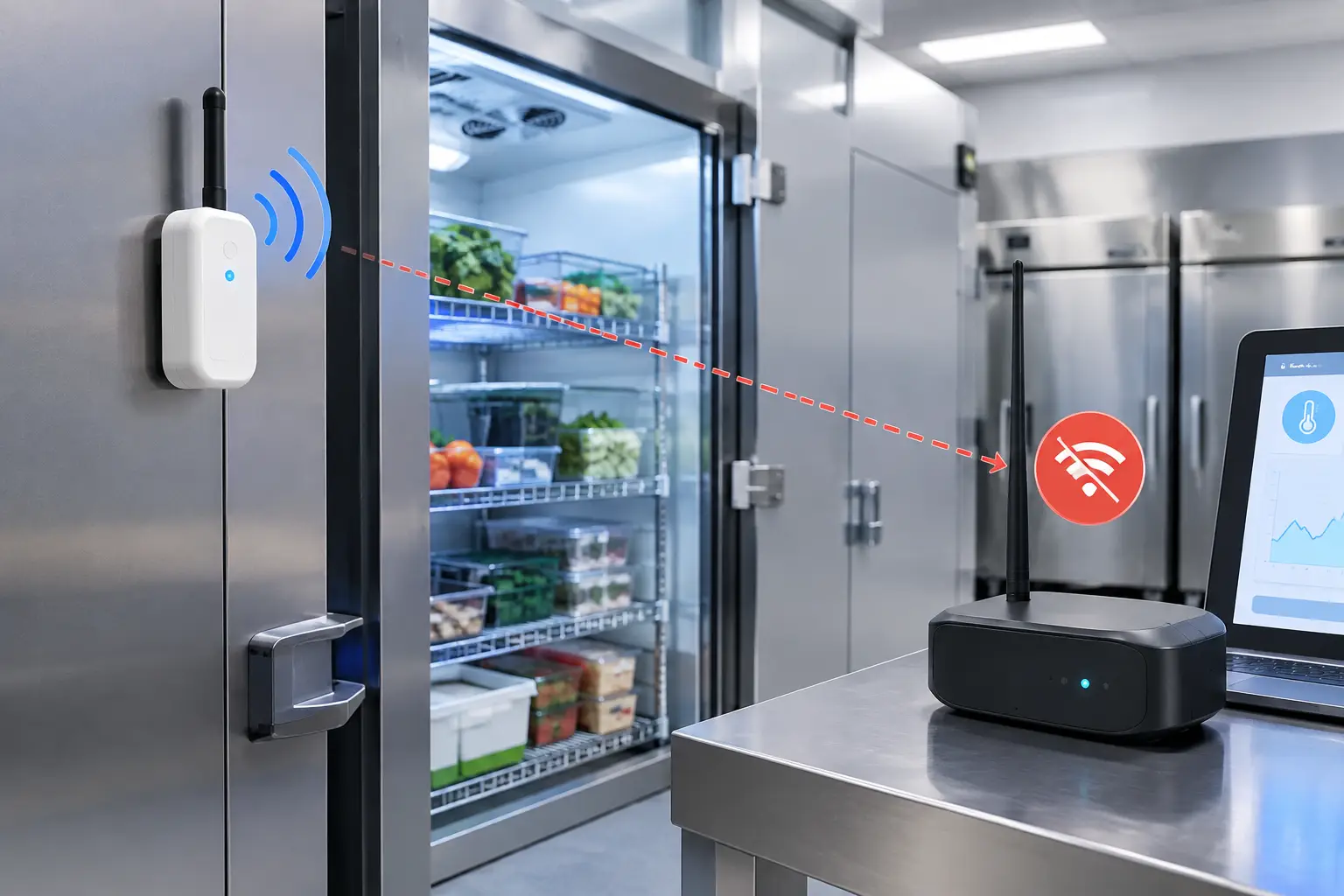
At its core, a cellular temperature monitoring system uses sensors to track conditions, a gateway or communicator to send that data over a cellular network, and a hosted platform to log readings and trigger alerts. Good systems do more than report a number on a dashboard. They watch for thresholds, rate-of-change problems, missed check-ins, power issues, and communication faults.
That last part matters. A monitoring setup is only useful if it tells you when the monitoring itself is in trouble. Supervised architecture separates serious systems from consumer-grade devices. If a sensor goes offline, a battery gets weak, or communication is interrupted, the platform should flag that issue before a temperature event becomes a product-loss event.
In real operations, temperature rarely exists in isolation. A walk-in freezer may also need door status, power monitoring, humidity tracking, or water leak detection nearby. A restaurant, lab, warehouse, or retail site gets better protection when those risks are watched through one coordinated platform instead of a pile of disconnected gadgets.
Why cellular matters more than Wi-Fi in critical environments
Wi-Fi works fine for plenty of convenience devices. It is a weak foundation for critical alerting when inventory, compliance, and business continuity are on the line. Local networks go down. Passwords change. Routers fail. IT policies shift. Coverage fades in mechanical rooms, basements, detached spaces, and metal-heavy environments. And when a temperature problem starts after hours, the last thing you want is an alert that never left the building.
A cellular temperature monitoring system avoids many of those failure points because it does not depend on the customer’s Wi-Fi network to send critical data. That does not make cellular perfect in every setting. Signal strength, building construction, and carrier coverage still matter. But for freezers, coolers, storage rooms, remote facilities, and unattended properties, cellular provides a far more dependable path for off-site notification.
There is also a security argument. Consumer Wi-Fi devices are often purchased for price, not for serious supervision, encryption, or operational dependability. In a monitored environment, low cost on the front end often turns into missed alarms, blind spots, and no usable reporting when someone asks what happened.
Where these systems earn their keep
The strongest case for a cellular temperature monitoring system is any environment where a bad reading turns into a business problem fast. Foodservice operators know this well. Ice cream shops, restaurants, convenience stores, grocers, and cold storage facilities can lose inventory long before opening time if a freezer drifts out of range. In that situation, speed is everything.
Laboratories and medical facilities face a different version of the same pressure. The loss may not just be inventory value. It can affect samples, testing integrity, chain of custody, or compliance documentation. Warehouses and distribution environments need remote visibility across larger footprints where manual checks are inconsistent and expensive.
Homeowners also have real exposure. A garage freezer packed with bulk food, a vacation property during winter, or a utility area with both temperature and leak risk can all benefit from remote monitoring. Home-Sentry® is built for those kinds of residential protection scenarios, while Shop-Sentry® fits commercial operations where the stakes are higher and the environment is more complex.
What to look for beyond basic alerts
Not every monitoring product deserves to protect a critical environment. A serious buyer should look past the simple promise of app notifications and ask harder questions.
First, check whether the system is supervised. If a sensor stops reporting, you need to know. Second, look at notification paths. Phone, text, and email alerts to multiple contacts are better than a single app push that can be missed or silenced. Third, ask about reporting. Logged temperature history matters for internal reviews, troubleshooting, and inspections.
Range is another major issue. Wireless performance inside a real building is very different from marketing claims based on open air. Metal surfaces, compressor equipment, thick walls, and long facility layouts expose weak radio designs quickly. Battery life also matters, but only in context. Long battery life is valuable if the system also reports battery status early enough to act.
Security should not be treated as a bonus feature. Encrypted communication and professionally managed cloud storage help protect operational data and reduce avoidable risk. If you are trusting a system to watch critical inventory, facilities, or home assets around the clock, it should be built like a security product, not a hobby device.
The trade-offs buyers should understand
There is no single best setup for every site. A standalone freezer in a small store has different needs than a multi-zone warehouse or a home with occasional occupancy. Cellular systems usually cost more than entry-level Wi-Fi products, and that is not accidental. The added value comes from communication independence, stronger alerting, better supervision, and service-oriented monitoring.
That means the right question is not whether cellular is the cheapest option. It is whether the lower-cost alternative can actually prevent loss when something fails at 2:00 a.m. If the answer is uncertain, the savings are probably false economy.
It is also worth recognizing that sensors alone do not solve response problems. Alerts have to go to the right people, in the right order, with enough escalation to get action. A system that sends one text to one manager is better than nothing, but it is not the same as a platform built to keep notifying until someone responds.
How Shop-Sentry® and Home-Sentry® fit the job
For businesses, Shop-Sentry® is designed around operational risk, not gadget-level monitoring. That means remote sensing, hosted data, alert workflows, and the ability to monitor more than temperature alone. In a freezer or refrigeration application, that broader visibility matters because the first clue of trouble might be power loss, door activity, ambient heat rise, or another related condition before total equipment failure becomes obvious.
For residential users, Home-Sentry® brings the same protection mindset to homes, vacation properties, utility rooms, and personal cold storage. That is especially useful for owners who do not want to rely on being physically present to catch a problem in time.
ABW Innovations has built its position by serving customers who cannot afford blind spots, including hundreds of ice cream shops worldwide. That is the kind of environment where missed alerts are expensive, immediate, and hard to explain away. Systems in that class are expected to deliver long-range wireless performance, supervised operation, secure transmission, and early warning before damage grows.
Choosing a system that will still matter after installation
A monitoring system should not become background noise. If it generates nuisance alerts, people ignore it. If it lacks reporting, no one can verify performance. If it cannot expand beyond one sensor, it becomes another disconnected tool to manage.
A better approach is to think in terms of ongoing protection. Will the system still make sense when you add another freezer, another room, another property, or another compliance requirement? Can it document what happened last night, last week, and last month? Can it keep communicating even when your local network does not?
Those are the questions that separate a real cellular temperature monitoring system from a checkbox purchase. When temperature control protects revenue, product quality, customer trust, or your own peace of mind, the system needs to do more than alert. It needs to stand watch when no one else is there.
The best time to prove your monitoring works is before the next failure, not during it.


Comments