

9 Best Laboratory Alarm Features That Prevent Loss
A laboratory freezer can drift out of range for hours before anyone notices. By the time a staff member sees the display, samples, reagents, vaccines, cultures, or other temperature-sensitive inventory may already be compromised. The best laboratory alarm features are built to prevent that chain of events - not merely report it after the loss is complete.
A serious lab monitoring system must do more than show a temperature on a phone. It must detect the condition accurately, recognize trouble early, confirm that the monitoring system itself is healthy, and reach people who can act. Anything less leaves a critical environment exposed.
The Best Laboratory Alarm Features Start With Reliable Detection
An alarm cannot protect what it does not measure correctly. For refrigerators, freezers, incubators, cold rooms, and controlled storage areas, the sensor and probe selection should match the application. A probe in a bottle or thermal buffer, for example, can better reflect product temperature than a sensor reacting to a brief blast of warm air when a door opens.
The system should also support configurable high and low thresholds. A one-size-fits-all alarm point is not acceptable when one unit stores reagents at 2-8°F and another protects ultra-low materials at -80°F. Laboratory staff need the ability to establish limits based on the asset, the stored material, and the organization’s procedures.
Look for monitoring that identifies more than a single out-of-range reading. A gradually rising temperature may signal compressor failure, a failing door seal, or a defrost problem well before inventory is ruined. Rate-of-change warnings and pre-alarm conditions give staff time to investigate while there is still a chance to prevent loss.
Alarm Delays Must Be Intentional
Delay settings are useful, but they can be dangerous when treated casually. A short door opening should not trigger a midnight emergency call. At the same time, a delay that is too long can turn a manageable equipment problem into a reportable incident.
The right approach is to configure delays around actual operating conditions. A high-traffic refrigerator may need a sensible grace period. An ultra-low freezer holding irreplaceable samples may require immediate escalation once a sustained deviation is confirmed. The setting should reflect the risk, not the desire to reduce notifications.
Alerts Must Reach a Person Who Can Respond
An audible alarm mounted on equipment is not enough. Laboratories are empty at night, on weekends, and during holidays - precisely when a power outage or refrigeration failure can do the most damage. Remote notification is a core protection feature, not an optional convenience.
A dependable system should send alerts through multiple channels, including phone calls, text messages, and email. Each method has a role. Text messages are fast and visible; email provides a written record; voice calls can cut through when an urgent event requires immediate attention. If one contact is unavailable, the alarm should continue to a defined list of responsible people.
Escalation matters as much as notification. Sending the same alert to one manager, who happens to be asleep or in a meeting, is not a response plan. The system should support unlimited contacts and workflows that notify the next person when the issue has not been acknowledged or resolved. That turns an alarm from a message into an operational safeguard.
Early Warnings Protect More Than Final Thresholds
The most useful alerts arrive before the failure becomes irreversible. A facility may want notice when a freezer begins warming, when a door remains open beyond normal use, or when ambient room conditions threaten equipment performance. Early-detection Super-Alerts® can give a team time to move inventory, dispatch service, or verify a developing issue before the final alarm limit is crossed.
This distinction is critical. A system that only announces catastrophe is documenting a loss. A system that warns early is helping prevent one.
Supervision Is a Non-Negotiable Laboratory Alarm Feature
A sensor can appear normal because it has stopped reporting. That is why supervised monitoring is one of the best laboratory alarm features for any environment with high-value inventory or compliance obligations.
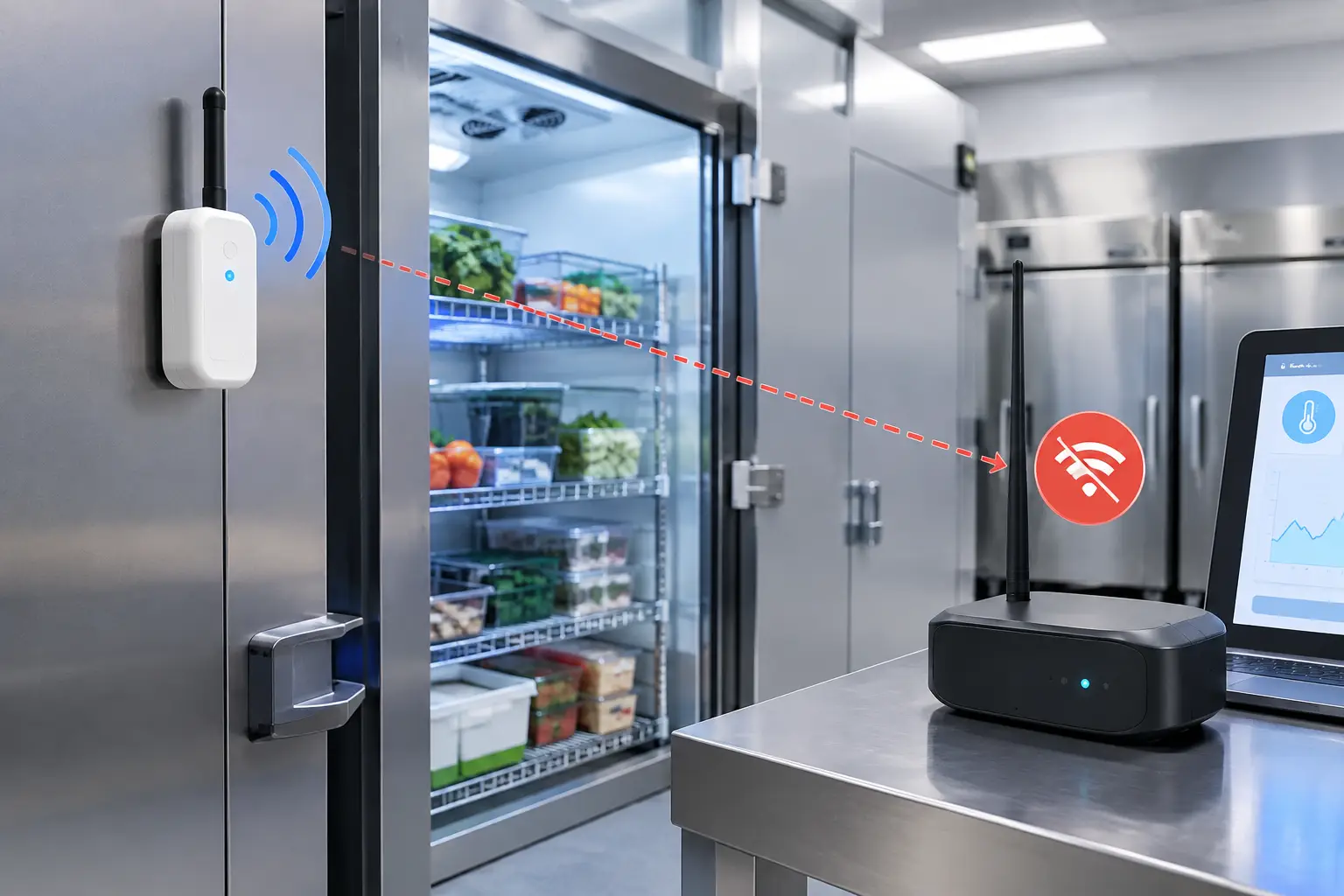
A supervised system checks the health of the complete monitoring path: sensor communication, gateway connectivity, battery condition, power status, and communication failures. When a sensor misses its expected check-in, the system should report that condition. When a battery weakens, staff should receive a maintenance alert before the sensor goes offline. When a gateway loses power or connection, that failure should be visible too.
Without supervision, a laboratory may believe it is protected until the next temperature excursion reveals that the monitor had been silent for days. That is not monitoring. It is false confidence.
Wireless Range and Power Resilience Matter
Many laboratories operate in buildings that are hostile to low-cost wireless devices. Concrete walls, metal shelving, refrigeration equipment, basements, mechanical rooms, and long corridors can all weaken ordinary Wi-Fi and Bluetooth connections. A laboratory alarm system needs long-range wireless performance designed for real facilities, not ideal conditions near a consumer router.
Power resilience is equally important. A refrigeration failure may occur during a utility outage, when a basic plug-in monitor or home Wi-Fi network is unavailable. The monitoring architecture should account for power loss, communicate that loss immediately, and use backup options appropriate to the facility’s risk level.
There is no single setup that fits every site. A small laboratory with one refrigerator has different requirements than a multi-room research facility with freezers, incubators, cold storage, and critical utilities. But every deployment should be tested for coverage, communication paths, and what happens when normal power or internet access fails.
Records Must Stand Up to Review
A laboratory alarm event should create more than a fleeting phone notification. Historical data, alarm logs, user actions, and documented temperature trends provide the evidence needed for internal reviews, quality procedures, inspections, and incident investigations.
Reporting should make it possible to answer practical questions quickly: When did the temperature begin to change? How long was it out of range? Who received the alert? When was it acknowledged? Did the unit recover, or was inventory moved? Clear records support accountability and help teams improve their response process after an event.
Continuous cloud-based data storage also removes the risk of relying on a handwritten temperature log that may be incomplete, lost, or filled out long after the fact. Automated records do not replace sound laboratory procedures, but they give those procedures a dependable factual foundation.
Security Should Be Designed Into the System
Remote monitoring introduces another responsibility: protecting the system from unauthorized access. Laboratories should look for encrypted communications, controlled user access, and a platform designed to protect both sensor data and notification workflows.
This is particularly relevant when monitoring connects multiple sites, sends alerts to mobile devices, or supports remote control functions. Convenience is valuable, but it should never come at the cost of weak security. Military-grade encryption and managed access controls help keep a critical protection system from becoming another point of vulnerability.
Why Consumer Sensors Are Not a Laboratory Protection Plan
Inexpensive consumer-grade sensors, including the types commonly sold on Amazon, may be fine for watching a pantry, a hobby refrigerator, or a vacation home. They are not in the same league as professional monitoring equipment built to protect commercial sites, regulated operations, or high-risk laboratory inventory.
The difference is not just the sensor price. Consumer devices often depend on local Wi-Fi, limited app notifications, short wireless range, basic batteries, and a single user account. They may not provide supervision, escalation, documented reporting, secure communication, or the support needed when an alarm occurs at 2:00 a.m.
For a laboratory, the question is not whether a low-cost sensor can display a temperature. It can. The question is whether it will continue protecting the environment through communication failures, power events, staff turnover, and a real emergency. That is the standard that matters.
Build the Alarm Plan Around Consequences
Before selecting a system, identify what each monitored asset protects and what failure would cost. Consider the replacement value of inventory, the time required to reproduce work, compliance exposure, customer commitments, and the availability of a person who can respond after hours. Those answers should determine alarm thresholds, escalation contacts, redundancy, and reporting needs.
ABW Innovations delivers this level of protection through its Shop-Sentry® commercial monitoring platform, which pairs long-range wireless sensors, gateways, secure cloud monitoring, and multi-channel alerting for critical environments. For smaller home-based workspaces or residential protection needs, Home-Sentry® can monitor conditions such as temperature, humidity, and water leaks.
The right laboratory alarm system should make trouble visible early, make system failures visible too, and make sure the right person is reached before product loss becomes unavoidable. When the next compressor fails or the next outage hits, that preparation is what protects the work that cannot simply be replaced.


Comments