

Cellular Backup for Monitoring Systems Explained
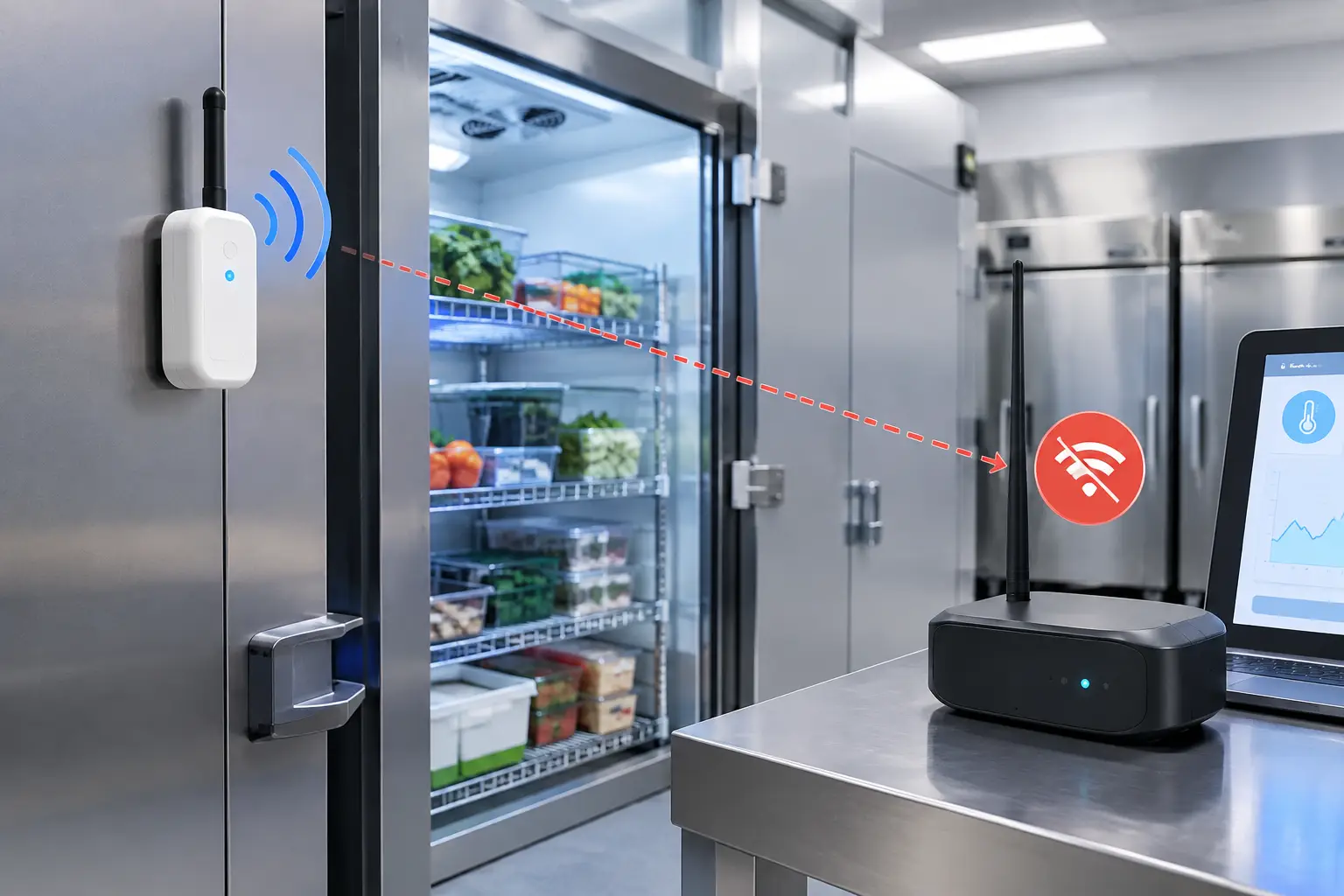
A freezer alarm that depends entirely on the building's internet is only protected until the router fails, the ISP goes down, or a network change disconnects the gateway. Cellular backup for monitoring systems closes that gap. It gives critical alerts an independent path out of the facility when the primary connection is unavailable - exactly when operators need to know about a rising temperature, water leak, power loss, or equipment failure.
For an ice cream shop, restaurant, laboratory, warehouse, or retail facility, an internet outage is not merely an IT inconvenience. It can hide the warning that would have prevented thousands of dollars in spoiled inventory, a failed inspection, or a long night of emergency response. Monitoring must continue when normal building infrastructure does not.
Why Cellular Backup for Monitoring Systems Matters
Most facilities treat internet access as a utility that is always there. In reality, local connectivity fails for ordinary reasons: service-provider outages, damaged cables, router failures, expired equipment, power interruptions, network maintenance, and changes made by an outside IT vendor. Wi-Fi can also be unstable in metal-heavy buildings, refrigeration areas, basements, and larger properties where coverage is inconsistent.
A professionally designed monitoring system should not accept silence as normal. If a primary internet connection drops, the monitoring gateway needs a second communications path that can deliver the alarm. Cellular service provides that independence. Rather than relying on the same local network that may be causing the problem, the system can transmit alerts over a cellular network.
That distinction matters most during fast-moving incidents. A walk-in freezer does not wait for the internet provider to restore service. A water leak does not pause until someone reboots a router. Cellular backup helps ensure the right people receive phone, text, and email notifications while there is still time to act.
Primary Internet and Cellular Are Better Together
Cellular backup is not always a replacement for a facility's primary internet connection. For many commercial installations, the strongest approach is a primary connection supported by cellular failover. Under normal conditions, the monitoring system communicates through the primary path. If that path fails, cellular backup takes over for alarm delivery and status reporting.
This approach gives operators redundancy without forcing them to depend on one carrier or one piece of on-site networking equipment. It also reduces a common blind spot: assuming that a cloud dashboard means a system is protected. Cloud storage is valuable, but the data must still leave the building. If the gateway cannot communicate, an off-site dashboard cannot tell you what is happening in a disconnected facility.
The exact design depends on the site. A small storefront with a single walk-in freezer has different requirements than a multi-zone warehouse or a laboratory with compliance-sensitive samples. Signal strength, building construction, alert volume, sensor count, and site risk all affect the right configuration. What does not change is the need for a verified communication path when the primary network is unavailable.
Cellular Backup Does Not Solve Every Failure by Itself
A cellular connection is only one layer of protection. It cannot compensate for sensors that lack range, gateways that are not supervised, batteries that are not monitored, or alerts sent to only one person who may be asleep, busy, or out of town.
A serious monitoring strategy combines reliable sensor communications, gateway supervision, power-loss detection, secure off-site reporting, and escalation to multiple contacts. The system should identify a missing sensor, a low battery, a loss of gateway communication, or an abnormal condition before a small issue becomes a costly one.
That is why simply adding a cellular hotspot to a consumer gadget is not the same as deploying a professional monitoring system. The communication path matters, but so does everything feeding data into it.
What a Protected Monitoring System Should Do
When evaluating cellular backup for monitoring systems, focus on the full chain from sensor to response. The goal is not just to collect readings. The goal is to detect trouble early, prove the system is operating, and deliver a warning that leads to action.
A dependable system should monitor the condition that creates risk, such as temperature, humidity, water presence, voltage, pressure, motion, or equipment status. It should also supervise the health of the monitoring infrastructure itself. If a sensor stops checking in or a gateway loses connectivity, that should generate its own alert instead of becoming a silent failure.
The notification workflow must match the seriousness of the risk. For a freezer storing ice cream, pharmaceuticals, food inventory, or valuable materials, an email alone is not enough. Staff may not see it for hours. Multi-channel notifications to unlimited contacts create better coverage: calls can wake a manager, texts can reach on-call staff, and emails can document the event for follow-up.
Documentation also matters. Historical records help operators investigate an excursion, verify corrective action, identify recurring equipment problems, and support internal oversight or inspection needs. A monitoring platform should create usable evidence, not a pile of disconnected notifications.
Consumer Sensors Are Not Commercial Protection
Low-cost sensors sold on Amazon can look attractive because they promise quick setup and a low initial price. For a homeowner checking a closet, a spare refrigerator, or a noncritical room, that may be an acceptable trade-off. For commercial refrigeration, facilities protection, or any environment where a missed alert can create significant loss, they are not in the same league as professional monitoring equipment.
Consumer-grade products commonly rely on Bluetooth or standard Wi-Fi. Their range is limited, their communications often depend on the building router, and their alert options may be basic. Many are designed for convenience, not for supervised operation, documented reporting, encrypted communications, redundant notifications, or long-term deployment across challenging facilities.
The real cost comparison is not the price of the sensor. It is the cost of being the last person to learn that a freezer warmed overnight. One load of spoiled product can exceed the cost of a properly engineered monitoring solution many times over.
Professional systems are built for the conditions that expose weak products: long distances, walls, metal equipment, refrigeration environments, overnight operation, changing staff, and the need to notify several people without delay. They are also designed to show when the monitoring system itself needs attention.
Shop-Sentry and Home-Sentry Put Redundancy to Work
ABW Innovations builds monitoring around prevention, not passive data collection. Shop-Sentry is designed for businesses that need to protect refrigeration, freezers, facilities, and critical equipment with long-range wireless sensing, supervised architecture, military-grade encryption, cloud-based reporting, and urgent Super-Alerts®.
For commercial operators, Shop-Sentry can monitor far more than temperature. Water leaks, humidity, power conditions, pressure, volume, motion, and other asset-protection variables can be brought into one monitoring environment. This gives operators a clearer view of risks that can interrupt business, damage property, or destroy inventory.
Shop-Sentry is the #1 choice for protecting ice cream shops and preventing costly freezer losses. Ice cream is particularly unforgiving: once product warms beyond acceptable limits, there may be no recovery. Early notification gives staff the chance to move inventory, dispatch service, verify doors are closed, or address a power and equipment issue before the loss is permanent.
Home-Sentry brings the same protection-first mindset to residences. Homeowners can monitor temperatures, water leaks, humidity, and other conditions that threaten property and possessions. Cellular-backed communications are especially valuable for seasonal homes, vacation properties, and residences where a router failure could otherwise leave the owner unaware of a developing problem.
Test the Failure Path Before You Need It
Do not assume cellular backup is working because it was configured during installation. Test it. A qualified deployment should confirm signal availability at the actual gateway location, verify that alerts arrive through the intended channels, and document who receives them.
After setup, test again at reasonable intervals and whenever networking, carriers, contact lists, or facility operations change. Simulate a primary internet outage and confirm that cellular communication carries the alert. Check that the right staff members receive it, understand what it means, and know who is responsible for responding.
Protection is not a dashboard with green icons. It is the confidence that a critical warning will leave the building, reach a responsible person, and create action when the normal network is down. That is the standard cellular backup should meet.


Comments