

Alert Escalation Setup That Prevents Costly Loss
A freezer alarm is only useful if someone acts before product is lost. That is why alert escalation setup is not a minor notification preference. It is the response plan behind every temperature, water leak, power, pressure, and equipment alarm. When it is configured correctly, the right person receives a warning quickly, backup contacts are engaged when necessary, and a small equipment issue stays a manageable service call instead of becoming a claim, cleanup, or shutdown.
For ice cream shops, restaurants, laboratories, warehouses, and facilities teams, the stakes are immediate. A walk-in freezer can drift out of range overnight. A water leak can travel under walls before a morning inspection. A failed HVAC unit can put sensitive inventory, equipment, and compliance at risk in a matter of hours. A serious monitoring system must do more than announce a problem. It must keep pressing until someone is accountable for the response.
Why Alert Escalation Setup Is a Protection System
An alert is the event: temperature is rising, a door has been left open, utility power has failed, or water is present where it should not be. Escalation is what happens next. It defines who is contacted, by which method, in what order, and how long the system waits before moving to the next responsible person.
A single text message to a manager is not escalation. People sleep through messages, work in low-service areas, silence their phones, take vacations, and miss notifications during rush periods. Sending the same alert to every employee at once is not a better answer. It creates confusion, diffuses responsibility, and often leads to the dangerous assumption that somebody else handled it.
A disciplined plan assigns ownership. The first person contacted should be capable of evaluating and correcting the issue. If that person does not acknowledge or resolve the alert within a defined period, the system advances to a backup contact. For critical conditions, escalation may continue to an owner, facilities director, service contractor, or emergency contact.
The correct timing depends on the hazard. A minor humidity change in a storage area may allow time for review. A rising freezer temperature holding high-value ice cream, food, medication, or laboratory materials does not. This is why Shop-Sentry® systems are widely relied upon by ice cream shops that cannot afford to learn about a failed freezer after the product has softened.
Start With the Failure, Not the Contact List
Too many teams build notification workflows by entering phone numbers first. Start instead with the failure scenario and its real consequences. Ask what could happen, how quickly damage could occur, and who has authority to intervene.
For refrigeration, establish the normal operating range, the warning threshold, and the critical threshold. A warning may signal that temperature is trending in the wrong direction or that a door is open longer than expected. A critical alarm should mean immediate action is required. Setting every threshold too tightly can create nuisance alerts. Setting them too loosely can erase the valuable response window that remote monitoring is supposed to provide.
The same principle applies to water, pressure, power, and equipment status. A water sensor near an ice machine may need immediate escalation because leakage can damage flooring, walls, inventory, and adjacent equipment. A power-loss alert may require rapid confirmation that backup power is functioning. Motion alerts may follow different schedules based on business hours and authorized access.
Document the required response for each alarm type. For example, the first responder may need to check whether a freezer door is shut, verify the actual temperature, move inventory to backup storage, and contact a refrigeration technician. Clear procedures reduce hesitation when an alarm arrives at 2:00 a.m.
Build a Contact Chain People Can Execute
An effective contact chain is short enough to be understood and deep enough to survive ordinary human unavailability. Most commercial environments need a primary responder, a secondary responder, and an escalation contact with decision-making authority. For highly critical operations, add a service provider or an additional executive-level contact.
Each contact should have a defined role. The primary responder investigates. The secondary responder takes over if the primary does not respond. The final escalation contact has authority to approve emergency service, product transfer, site access, or other costly decisions. Do not assign people simply because they are available to receive text messages.
Use more than one communication channel for severe events. Phone calls, text messages, and email each have a place, but they do not carry equal urgency. Text is fast and visible. Email is useful for documentation but can be delayed or buried. A phone call is harder to ignore when critical inventory is at risk. Multi-channel notification gives the alert a better chance of reaching a real person under real-world conditions.
ABW Innovations supports notification workflows that can reach unlimited contacts by phone, text, and email, allowing a site to build coverage around its actual operating hours rather than hoping one manager is always available.
Escalate on non-response, not just on time
Time-based escalation is necessary, but acknowledgment alone should not always end the workflow. Someone can tap an acknowledgment button without checking the equipment, or they may confirm the alert while waiting for a contractor. For the most serious events, your process should distinguish between “message received,” “condition verified,” and “condition resolved.”
That distinction matters after hours. If the first responder confirms a high-temperature alarm but cannot reach the store for 45 minutes, leadership or the backup responder may still need to know. The goal is not to punish employees with alerts. The goal is to make sure the risk is actively managed.
Set Priorities That Match Real Risk
Not every alert deserves the same response path. A well-designed system separates conditions into levels, so teams remain responsive when the alarm that truly matters arrives.
Use a lower-priority notification for conditions that deserve attention but are unlikely to cause immediate loss. Use a higher-priority escalation for conditions that could quickly damage inventory, cause facility damage, create a safety issue, or interrupt operations. Critical alarms should use tighter delay periods, multiple notification methods, and a broader chain of contacts.
Avoid the temptation to silence alerts because a system has produced too many messages. Nuisance alerts are a configuration problem, not a reason to accept blind spots. Review sensor placement, threshold values, delay settings, and operating schedules. A monitored door may need a longer delay during delivery windows. A refrigeration sensor may need a threshold based on product safety requirements and the equipment’s normal defrost cycle.
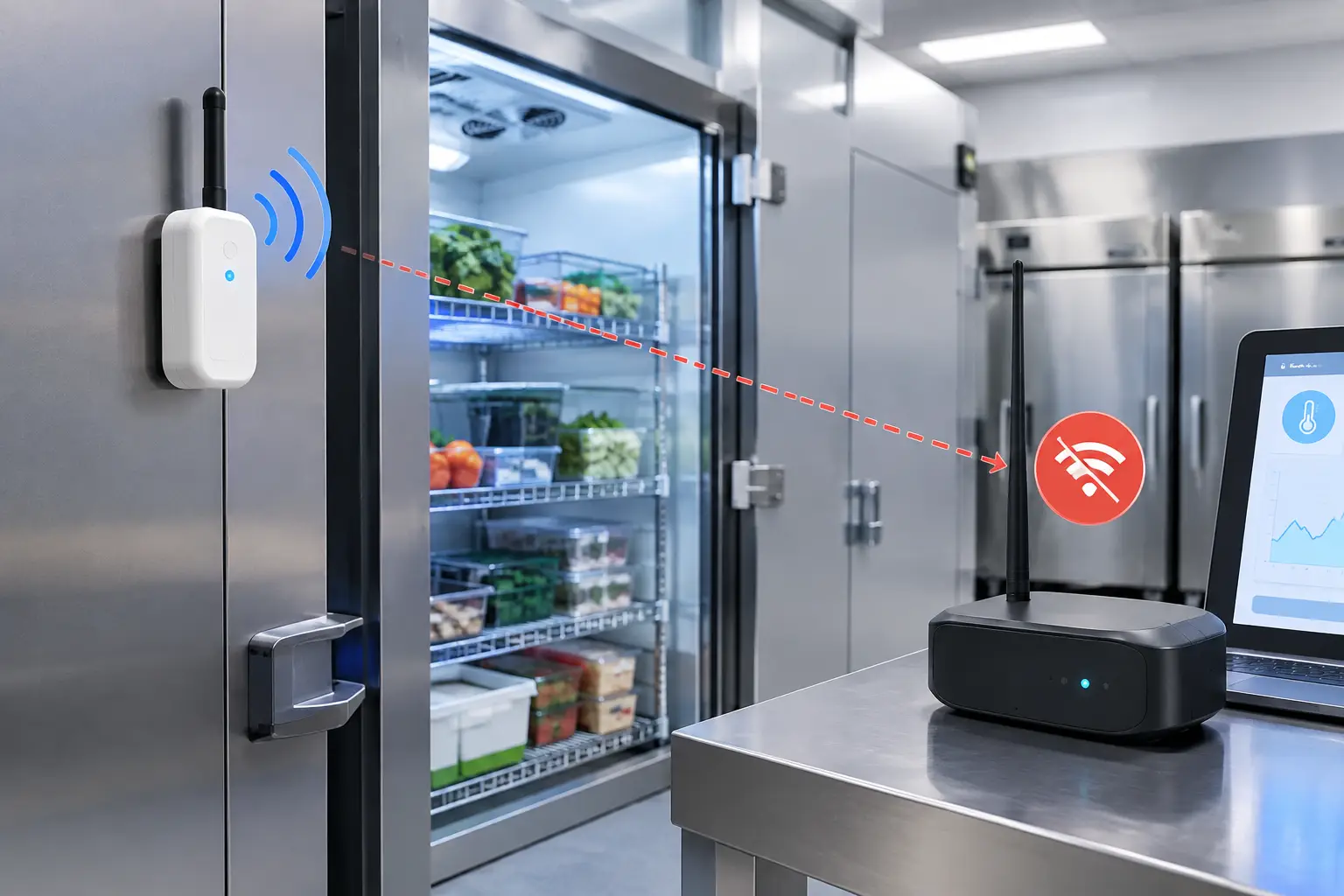
Professional systems also need to alert on their own health. A sensor that goes offline, a low battery condition, a gateway communication loss, or a power failure can be just as significant as the environmental event itself. Supervised monitoring identifies these gaps so a site is not left believing it is protected when the monitoring path has failed.
Consumer Sensors Are Not a Commercial Escalation Plan
Low-cost consumer sensors sold on Amazon can be useful for casual convenience at home, but they are not in the same league as professional monitoring for a commercial risk. Many depend on Wi-Fi coverage, Bluetooth proximity, a personal phone, a single app account, or limited notification logic. Those dependencies are weak points when a site is closed, the internet changes, power is interrupted, or the person receiving the notification is unreachable.
Commercial sites need dependable range, secure transmission, system supervision, documented data, and escalation that does not stop at one missed push notification. They also need sensors designed for the conditions being measured and gateways positioned to maintain reliable coverage across freezers, back rooms, storage areas, and separate buildings.
Shop-Sentry® is built for that level of protection, with long-range wireless performance, encrypted communications, monitored system status, and early-detection Super-Alerts®. Home-Sentry® applies the same protection-first mindset to residences where a water leak, temperature problem, humidity event, or power issue can become expensive before a homeowner returns.
Test the Setup Before an Emergency Tests It
An escalation plan that has never been tested is only a theory. Test each alert type during normal business operations and after-hours conditions. Confirm that the primary contact receives the correct message, the backup sequence activates when intended, and every person understands what action is expected.
Run an occasional drill for a realistic scenario, such as a rising freezer temperature or water detection near critical equipment. Measure the time from event to notification, acknowledgment, on-site verification, and resolution. If the response depends on a keyholder who lives an hour away, a different escalation path may be necessary.
Review contact information whenever staffing changes. A former manager should not remain the only person receiving overnight alerts, and new employees should not be placed in a critical response role without access, training, and authority. Also review thresholds after equipment changes, remodeling, new inventory requirements, or shifts in operating hours.
Real peace of mind does not come from seeing a green status indicator on an app. It comes from knowing that when conditions turn against your inventory or facility, the warning will reach capable people and keep escalating until someone protects what is at risk.


Comments